Instruments by Science Group
 Macromolecular
 Soft Condensed
  Imaging and
 Biological
 Magnetic
 Structures and
 Crystallography
  Spectroscopy
 I11 Contact
Beamline Phone Number:
+44 (0)1235 778905
Principal Beamline Scientist:
Stephen Thompson
Tel: +44 (0)1235 778546
E-mail:
[email protected]
Science Group Leader
Philip Chater
Email: [email protected]
Tel: +44 (0)1235 778677
I11 High Resolution Powder Diffraction
Status: Operational
Wavelength: 0.5-2.1 Å
Energy: 6-25 (30*) keV - optimised at 15 keV
Energy: 6-25 (30*) keV - optimised at 15 keV
Operations
Issues regarding the 2theta motion have largely been resolved and a replacement MAC1 stage has been installed. The MAC detector stages are being returned to operations. However, due to unrelated ongoing issues, the MACs are available for fixed energy measurements at 15 keV only.
Enquiries regarding beamtime applications etc. should be directed to Stephen Thompson ([email protected] )
----------------------------------------
Powder diffraction is the principal technique for determining the structure of materials that do not necessarily form large ordered crystals. It is therefore the technique of choice for the analysis of many naturally occurring real-world materials such as minerals and artefacts, as well as novel man-made materials where synthesis is under-developed, or highly strained materials subject to twinning, or indeed again where they do not naturally form lsingle crystals.
The technique has the advantage of a relatively simple scattering geometry but has been much enhanced by the development of intense synchrotron sources as well as advances in data analysis, using modelling, direct methods and global optimisation methods.
High intensity X-ray sources, such as the I11 undulator, coupled to increases in detector speeds at high resolution makes powder diffraction the technique of choice for in situ and in operando studies of materials under non-ambient conditions such as high/low temperatures or gas loading.
In recent years powder diffraction has provided crucial structural information for many strategically important materials including:
- Metal-organic-frameworks for carbon capture and gas storage
- Lithium-ion battery and Solid Oxide Fuel Cell materials
- High performance alloys
- Self-assembled nano-scale solids
- High temperature superconductors
- Bio-engineered materials and minerals
The combination of very high angular resolution, high count rates and controlled environmental conditions on I11 make it possible to carry out detailed structural analysis of complex materials. These studies are important to many fundamental areas of the physical, life and environmental sciences as well as pharmaceutical, engineering and industrial materials.
This versatile beamline has the resolving power to probe deep into sample structures ( Δ d/d ~ 10-3-10-5), to detect rapid changes ( Δ t ~ ms-s) under non-ambient conditions as they occur and to perform resonant diffraction in order to solve complex structures containing low normal electron contrasts.
The call for proposals for Long Duration Experiments is now Open
As the I11 facility for long duration experiments (LDEs) is almost at full capacity, there will be no periodic call for proposals. Instead, we are operating as a “roll-off roll-on” facility. If you wish to make an enquiry, please contact beamline scientists Dr Stephen Thompson and/or Dr. Sarah Day.
Please also refer to the technical information (in the tabs above) and our Application Guidelines.
The Long Duration Experiment (LDE) project is now in operation. This new facility is unique within the synchrotron world and can be used for scientific investigations where samples need to be maintained at, or cycled through, various non-ambient conditions for extended periods of time. More details regarding the upgrade project can be found here.
To complement the existing I11 high resolution and fast time-resolved facilities, the LDE facility opens up new opportunities for those experiments which require weeks to months of periodically monitoring “slow” changes. It is of particular benefit to certain research areas such as batteries and fuel cells where important information on the development of phases over time cannot be obtained via ex-situ methods. Other research areas that will similarly benefit include studies of crystallisation, nuclear waste storage materials, gas storage, mineral evolution, seasonal effects, thermal and electrical power cycling and corrosion science, etc.
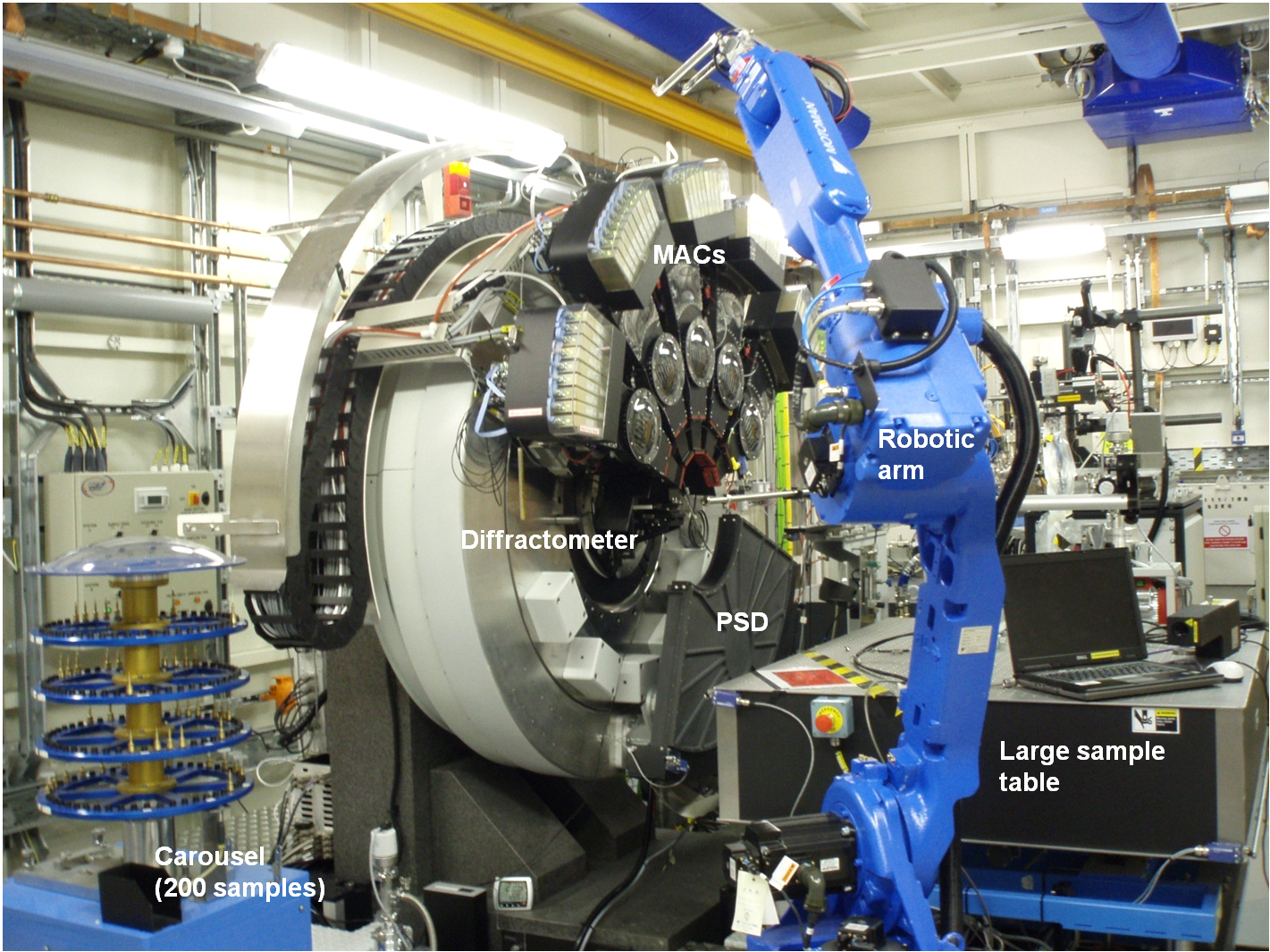
High-resolution and time-resolved data are collected in EH1
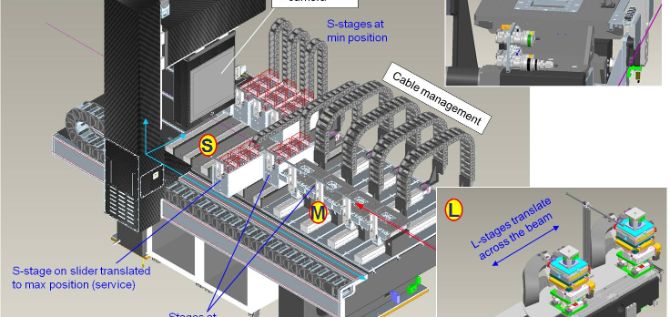
Learn about our Long Duration Experiment Facility
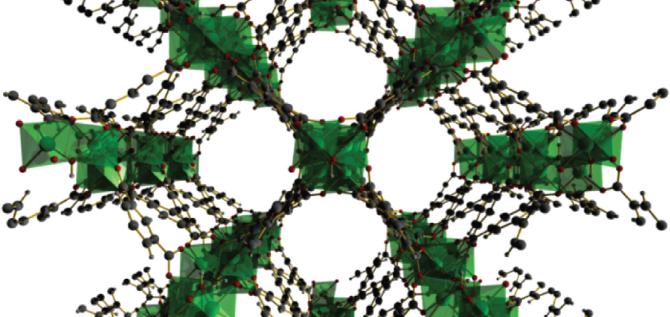
Read some of our latest user publications
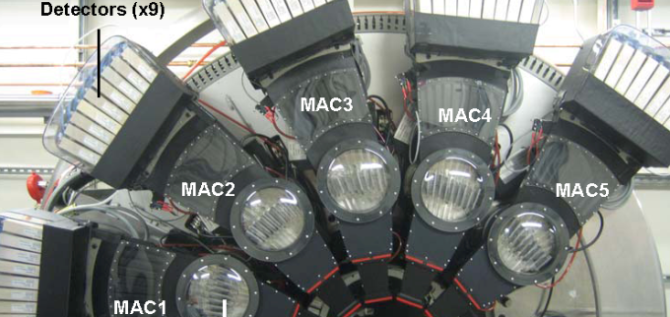
High resolution data are collected using our MAC detectors

Diamond Light Source is the UK's national synchrotron science facility, located at the Harwell Science and Innovation Campus in Oxfordshire.
Diamond Light Source Ltd
Diamond House
Harwell Science & Innovation Campus
Didcot
Oxfordshire
OX11 0DE
Copyright © Diamond Light Source. Diamond Light Source® and the Diamond logo are registered trademarks of Diamond Light Source Ltd
Registered in England and Wales at Diamond House, Harwell Science and Innovation Campus, Didcot, Oxfordshire, OX11 0DE, United Kingdom. Company number: 4375679. VAT number: 287 461 957. Economic Operators Registration and Identification (EORI) number: GB287461957003.