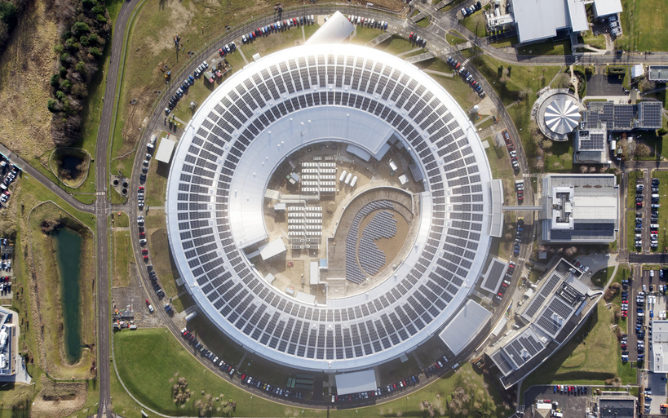

The Diamond synchrotron provides leading edge facilities for science.

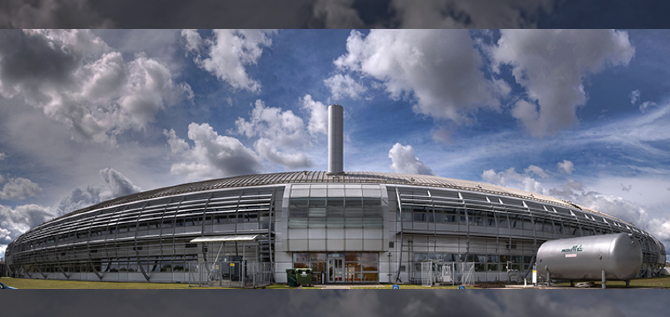
Aerial view of DiamondDiamond uses powerful magnets such as this sextupoleDiamond Light Source is a new scientific facility in South Oxfordshire on the Harwell Science and Innovation Campus. This giant machine, called a synchrotron, supports ground-breaking research in the life, physical and environmental sciences.
arrow iconRead more about Diamond Light Source

Latest News

Synchrotron User Meeting 2010
08 Sep 2010
The synchrotron user meeting brings together scientists using synchrotron light with satellite session on specialised topics. More...
Diamond Phase III: Call for Expressions of Interest and preparation of Outline Proposals
17 Aug 2010
In May 2010, Diamond Light Source issued a call for ideas for new beamlines as part of the prioritisation procedure for Phase III of the Diamond Project. More...
Diamond podcast logoDiamond Podcast - Episode 9: Royal Society Summer Exhibition
22 Jul 2010
Listen to the latest news from Diamond Light Source online, including news, interviews with scientists and insights into what is happening at the UK national More...

Twitter icon For the latest news, follow us on Twitter

arrow Older news articles

Subscribe to our newsfeed Subscribe to our newsfeed

Spotlight


November public open day: 'Inside Diamond'

Inside Diamond is a series of public events, welcoming visitors to Diamond to meet our scientists, find out about the exciting work taking place here, and have a tour of the synchrotron itself. The next one takes place on Saturday 13th November 2010.

arrow icon Register your interest

Using Diamond - Universities


Diamond is free at the point of access for academic researchers, provided the results are in the public domain.

Current Call Status: Accepting proposals for Direct, Programme and Rapid Access.
Deadline: 1 October 2010

Using Diamond - Industry


Diamond also welcomes industrial researchers through a range of access modes including proprietary research.

Latest Science Highlights

The mighty microbe behind coastal erosion? Synchrotron studies at the boundaries of our island nation.
01 Sep 2010
Great Britain is an island nation, with over 11,000 miles of coastline*. But the coastline is continually changing, due to the process of coastal erosion. More...
Investigating the Failure of Metal on Metal Hips
28 Jul 2010
Metal-on-metal hip replacement is a treatment for “wear and tear” arthritis (osteoarthritis) – one of the commonest diseases in the world. More...

arrowMore Science Highlights
arrowForthcoming Events